

Transforming Youth Sports: Embracing Mistakes Over Winning
November 06, 2025
3 min
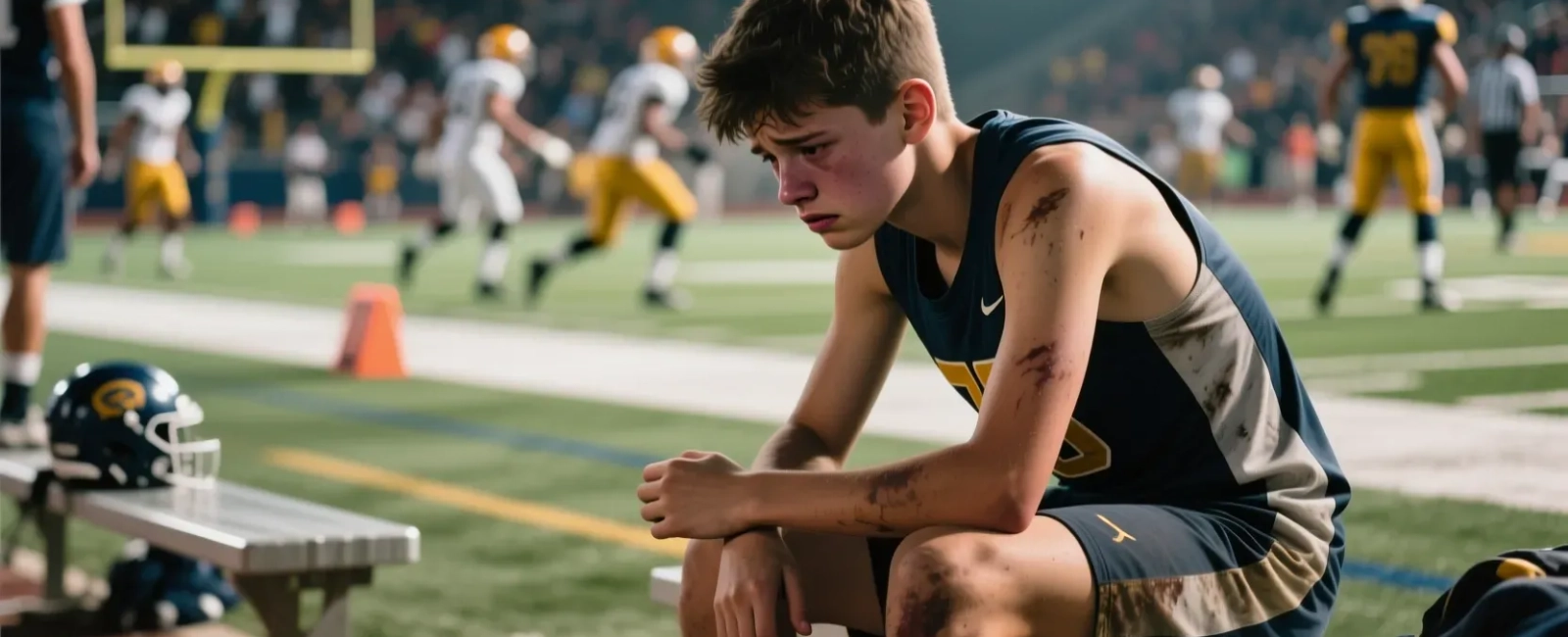
You know that look. The one where your kid trudges off the field, cleats dragging, shoulders slumped in a way that has nothing to do with the scoreboard. You figure they’re just tired, maybe a bit grumpy. It’s normal, right? We all push through fatigue. Heck, we celebrate it—“no pain, no gain” is practically baked into the sports anthem. But what if that look isn’t just a bad day? What if it’s a signal, the only visible tip of a whole iceberg of trouble brewing underneath?
Let’s get real for a second. We’ve all seen the season that starts with fireworks and fizzles into a slog. The star pitcher whose fastball loses its pop. The quick-footed receiver who suddenly can’t shake a defender. Our first instinct is often to think they need to work harder. More pitching lessons. Extra conditioning. Toughen up. But I’m here to suggest, from the dugout and the sidelines, that the bravest, smartest thing we can do is sometimes the exact opposite. We need to learn when to pull back.
This isn’t about being soft. It’s about being smart. Overtraining syndrome isn’t just being a little worn out; it’s a full-system breakdown. And for kids, whose bodies and brains are already under construction, the stakes are quietly enormous.
This is also about clearing up a confusion we’ve accidentally baked into youth sports. There’s a big difference between the fatigue that makes you better and the fatigue that robs you blind. A hard practice that leaves your legs heavy and lungs burning is part of the deal. A week where you feel flat and then bounce back is normal, too. The danger comes when “tired” stops cycling and starts sticking—when a kid strings together day after day of underwhelming sessions and the spark goes missing. That’s not grit training. That’s system failure creeping in.
We toss around phrases like “pushing limits” and “leaving it all on the field.” They sound noble. They sound like commitment. The problem is, a young athlete’s body doesn’t hear slogans. It operates on a strict balance of stress and repair. Training provides the stress, and during rest, the body repairs itself a little stronger than before. That’s the whole game.
Overtraining syndrome is what happens when that game breaks down. The stress barrels right past the repair. It’s not a muscle pull you can ice. It’s a deeper glitch that tinkers with the very wiring. Think of it like your car’s engine light coming on because the oil is low, the coolant is overheating, and the transmission is slipping—all at once. You can’t just top off one fluid and call it fixed.
What’s under the hood? The control centers that manage energy, recovery, and stress start miscommunicating. The hypothalamus and pituitary—the traffic cops for hormones—get hammered by a steady stream of physical and psychological stress signals. Cortisol, the body’s “get up and go” but also “watch out” hormone, is meant to rise and fall. In a healthy training cycle, it helps mobilize energy for hard efforts and then backs off to make room for the rebuilding team—testosterone, growth hormone, and a host of repair processes. Push too hard, too long, with too little recovery, and that rhythm gets scrambled. The result? The signals to build, repair, and adapt get drowned out by a constant background alarm.
The research gets specific about this. One standout investigation followed young soccer players and pinpointed three major alarm bells that tend to ring before performance truly tanks. The most critical was a shift in key hormones—specifically, the ratio of testosterone to cortisol. You don’t need to be an endocrinologist to grasp the concept: one hormone helps build and repair, the other is all about stress response. When that balance tips too far for too long, the body’s rebuild crew gets sidelined. The second alarm was a psychological score they called “balance,” measured by a sports-specific questionnaire. The third was a simple math problem: the ratio of what an athlete did this week versus what they’ve averaged over the last month.
If you’ve ever watched a kid storm through a tournament weekend—four games in two days, hotel sleep, fast food, the emotional highs and lows—and then look empty at practice on Tuesday, you’ve seen that ratio issue in real time. The body still thinks it’s dealing with an emergency, so it stays in stress mode. You can’t stack intensity on top of that and expect magic. You’ll get tight muscles, slower reaction times, and a brain that feels like it’s looking through fog.
Here’s what’s fascinating. The scientists built a prediction model using these and other factors that could flag a kid as high-risk about a week before their game performance actually dropped. The model was scarily accurate. But you don’t need a blood test or a GPS tracker to grasp the principle. Those three alarms tell us the story: the problem is never just physical. It’s a cocktail of bodily stress, mental wear, and a training load that’s gotten out of sync with recovery. Ignoring the grumpy walk-off might mean you’re missing the first chapter of a story you really don’t want to read.
A simple way to picture it: think of training like charging a phone with a finicky battery. Every workout drains it a bit. Sleep, food, and downtime recharge it. If you keep opening apps, cranking brightness, and skipping the charger, at some point the phone doesn’t just need a charge—it starts crashing even when the battery icon says 40%. That’s the nervous system saying, “I can’t keep up with the demands you’re placing on me.” Young athletes hit that wall faster because their operating system is also updating in the background—growth, school stress, social pressure. That update is non-negotiable, and it borrows power when it has to.
So, if we can’t wait for the slump to show up in the stat sheet, what do we watch for? The signs are often quiet, easy to credit to school, puberty, or just being a kid. That’s the trap.
Let’s break it down beyond “they seem tired.”
First, watch for the performance clues that don’t add up. We’re talking a noticeable drop in speed, strength, or coordination that sticks around for more than a couple of days. Their usual sprint time slows. Their throwing accuracy gets wonky. A gymnast who sticks landings starts taking extra steps. A swimmer who usually closes hard fades in the last 25. They’re clumsier, tripping over feet that usually know the dance. Practice looks like a struggle, not a challenge. This is the body saying the fuel tank is empty and the engine is starting to misfire.
A useful gut check is the “ten-day rule.” If underperforming stretches past a normal recovery span—about a week to ten days—with no sign of rebound, that’s not just a heavy week. Paired with a sour mood or sleep changes, it’s a blinking light.
Then, tune into the mental and emotional broadcast. A loss of enthusiasm is the big one. The sport they loved now feels like a chore. They might get anxious or irritable before games or practice in a way that’s new. Your normally even-keeled kid snaps at small things, or a perfectionist becomes oddly indifferent. They may bargain to skip warm-ups or volunteer for positions they usually avoid. You might see a dip in grades or focus at school—the mental fatigue follows them everywhere. Teachers might mention zoning out or uncharacteristic forgetfulness. This isn’t a kid being lazy. This is a kid whose system is overloaded. The American Academy of Pediatrics ties this directly to burnout, a nasty state of exhaustion that makes a kid quit the sport altogether. The love of the game gets squeezed out by the grind.
Finally, pay attention to the physical signals that scream for a break. Frequent, minor illnesses—colds, sore throats—are a huge red flag. It means their immune system is running on fumes. Complaints of persistent, nagging muscle or joint pain that rest doesn’t fix. Stiffness that lasts into the next afternoon. Heels, knees, and lower back that feel achy on everyday stairs, not just after sprints. Changes in sleep (too much or can’t sleep) or appetite. A kid who usually devours dinner is suddenly picking; another who never eats breakfast is raiding the pantry late at night. An elevated morning heart rate is a classic, though trickier to track.
If you want a simple, low-tech check: have them take their resting pulse right after waking up, three days in a row, before getting out of bed. Average it. If, after a couple of hard sessions, that number jumps up 5–10 beats for several days, something is off. Pair that with how they feel getting out of bed—heavy legs, headache, unusually cranky—and you’ve got a strong case for dialing back. It’s the body’s way of saying, “I’m still paying off stress from earlier.”
A quick word about soreness. There’s normal delayed-onset muscle soreness—the kind that shows up a day later, peaks around 48 hours, and fades as the body adapts. Then there’s soreness with swelling, lingering tenderness at growth plates, or pain that returns with every session despite lighter work. The second category is a warning. If it seems like aches are rotating—shin splints one week, Achilles pain the next, back pain after that—you’re looking at a system problem, not a single cranky tendon.
The clinical report from Lurie Children’s Hospital puts it plainly: this is a “distinct pathological state,” not just standard tiredness. It’s the difference between being worn out after a tough workout and being depleted. The first builds you up. The second breaks you down.
This is where we, as parents and coaches, can fundamentally misunderstand the landscape. We see a dedicated young athlete and think their capacity for work is simply a smaller version of an adult’s. The science says that’s dangerously wrong.
Young athletes adapt to training in unique ways. For instance, studies show that while kids can get stronger with resistance training—seeing gains of 35–40% in strength—their peak aerobic capacity (VO₂ max) is less “trainable” than an adult’s. They might only see a 5% improvement. The big gains come from other areas, like improving their movement economy or lactate threshold. This tells us that piling on endless miles or brutal conditioning sessions, hoping for an adult-level physiological payoff, is a recipe for frustration and breakdown.
A lot of the early strength a kid gains is neural—they learn to recruit muscle better, coordinate movement patterns, and fire in sequence. That’s great news because it means well-designed technique work can be gold. It’s also a warning: if you chase gains with big volume too early, you’re essentially stepping on the gas before the steering is dialed in. The chassis wobbles when you push speed without control.
More critically, their bodies are already doing the immensely taxing work of growing. Bones are lengthening, hormones are fluctuating, neural pathways are forming. Growth plates are open and vulnerable to repetitive stress. Adding a brutal, monotonous training load on top of that biological construction project is like asking a contractor to build a perfect addition while you’re constantly shaking the foundation. Something will give.
Common overuse trouble spots in this age group—Sever’s at the heel, Osgood-Schlatter at the knee, stress reactions in the shin or foot—aren’t random bad luck. They’re signals that the training-to-recovery ratio is off. The tissues are crying uncle. Layer on school, social life, and the emotional rollercoaster of adolescence, and you’ve got an athlete with limited stress budget. Spend it carelessly, and the debt shows up as illness, injury, or burnout.
The data hints at how common this overreach is, suggesting nearly a third of young athletes might be brushing against overtraining. Why? Because the line between a productive load and a destructive one is thinner for them. A sudden and large increase in training volume—something as simple as making the travel team or starting a new, intense club season—is a major risk factor. A schedule that goes from two practices a week to five, with weekend showcases, is a prime setup for collision with that line.
Another easy-to-miss factor: recovery inputs simply matter more for kids. Sleep drives growth hormone release and neural consolidation. A ninth-grader cutting sleep to six hours to keep up with homework and practices isn’t just tired; they’re literally shrinking the window when their body could rebuild. Ditto for food. Low energy availability—whether unintentional from a busy schedule or intentional from body-image pressure—collides head-on with high training loads. The repair crews can’t work without supplies. You can’t frame it as optional and expect sustainable progress.
We need to stop treating youth training like a miniature version of a college program with shinier uniforms. It’s a different ecosystem with different rules. Respect those rules, and kids blossom. Ignore them, and you get a short flash followed by a long fade.
Spotting the problem is only half the battle. The fix is where most well-intentioned plans fall apart. You can’t just take a weekend off. Recovery from true overtraining isn’t a pause; it’s a deliberate, structured reset.
Step one is non-negotiable: Complete Rest. And I don’t mean “just play another sport.” I mean a real shutdown. The guidance from experts is startlingly clear: athletes need a minimum of two months each year away from structured, sport-specific training. Not in chunks, but in a solid block. They also need at least one full day off from all organized activity every week. This isn’t coddling; it’s the period where the body does its actual strengthening work. Without it, you’re just digging a hole.
If that sounds radical, think about what “off” actually allows. Sleep routines stabilize. Appetite normalizes. Nagging pains resolve. The nervous system resets its baseline, so effort feels like effort again, not a constant grind. And there’s a huge psychological benefit: a kid who steps away and misses the ball in their hand or the water on their skin comes back with authentic motivation, not just compliance.
Step two is Gradual, Monitored Return. After symptoms improve, you don’t jump back to where you left off. You start with duration, not intensity. Get them moving for the appropriate time, but at a low, conversational pace. Leave the stopwatch and the drill sergeant attitude in the car. The focus is on relearning the joy of movement. Only after they can handle the duration comfortably do you ever so slightly tick up the intensity. This process requires patience. A lot of it.
A simple ladder works well:
Use subjective cues as guide rails. Ask, “How hard did that feel on a scale of 1–10?” If a session designed to be a 5 starts feeling like an 8, adjust on the spot. If they need an extra rest day, take it without drama. Progress isn’t linear when the system is rebuilding.
Step three is Building a Smarter Plan. This is the preventative medicine. It means actively avoiding single-sport specialization before late adolescence. Kids who play multiple activities suffer fewer injuries and last longer in sports. It means watching that “acute-to-chronic workload ratio” from the research. In plain English? Don’t let this week’s training spike way above what they’ve been doing recently. A 10% weekly increase is a safer guideline than a 50% leap.
If practice schedules are hard to control, control what you can. After a weekend tournament, treat Monday like a recovery day—aerobic flush, mobility, and early bedtime. If your kid is juggling school tryouts and club training, communicate with coaches so they’re not doing two intense sessions back-to-back. Most coaches will adjust if they understand the goal is preserving performance for the season, not winning Tuesday’s conditioning contest.
Build a weekly rhythm that bakes in recovery:
Sleep is the cheapest, highest-leverage tool you have. Aim for 8–10 hours for teens, with consistent bed and wake times. Electronics out of the bedroom helps. So does a wind-down routine—shower, stretch, read, lights out. Nutrition is the other cornerstone. A pattern of protein with every meal, carbs to support training times, and plenty of color on the plate is a solid baseline. Pack snacks if after-school practices run long. Recovery isn’t magic supplements; it’s predictable fuel at predictable times.
It also means becoming a detective for enjoyment. Is practice all structured drilling, or is there time for free play, for the silly, joyful messiness that made them love the game in the first place? That psychological “balance” score from the prediction model is huge. Protecting their mental state is as crucial as icing an ankle.
One thing almost everyone underestimates: how potent a short break inside a season can be. Two or three days off after a run of games can feel like a luxury, but if they come back fresher, faster, and happier, you’ve gained ground. Fitness doesn’t evaporate overnight. What fades fast is sharpness when fatigue stacks up. Clearing that fog brings the talent back to the surface.
The biggest challenge isn’t the plan on paper; it’s the psychology. Kids worry they’ll fall behind. Parents fear lost opportunities. Coaches fear softening standards. Reframe it as performance protection. The aim isn’t to avoid hard work—it’s to make sure the hard work shows up on game day. Tired training builds tired athletes. Recovered training builds durable ones.
If you want a simple conversation starter with your athlete, try this: “On a scale of 1–10, how excited are you to practice today?” If that number keeps landing at a 3 or 4, pay attention. Pair it with: “How did you sleep?” and “Anything hurting?” Three low scores in a row is your cue to adjust the plan now, not after a slump becomes a spiral.
Look, I get it. In the heat of a season, with playoffs looming or a college scholarship shining like a distant star, pulling back feels like surrender. It feels like you’re letting them down, or letting them off the hook. But reframe it.
You’re not stepping off the gas. You’re being the mechanic. You’re checking the gauges, changing the oil, and ensuring the engine they’re building—the one that has to carry them for decades—doesn’t burn itself out before the journey really begins. The goal isn’t to win next week’s game at all costs. The goal is to have a kid who still loves to play, who is still healthy and hungry, next year and ten years from now. That’s not losing. That’s the smartest win there is.
And here’s the thing that surprises people: many athletes see their best stretch right after a reset. The legs feel springy again. Decision-making sharpens. Skills they’ve been drilling finally click because the brain isn’t slogging through mud. Parents notice the smile first, coaches see cleaner reps next, and the scoreboard usually follows. That’s not a miracle. That’s what happens when the stress-to-recovery balance stops fighting and starts cooperating.
So when you catch that look—the slow walk, the quiet sigh, the kid who drifts through warm-ups like a ghost—treat it as a gift. It’s a whisper before the shout. You have a window to act while the fix is still simple. Listen, adjust, protect the spark. The work will still be there tomorrow. The love of the game is worth guarding today.
